

The Health Metrics High Performers Pay Attention To
The leaders we work with don't track everything. They focus on meaningful indicators that influence performance, longevity, and decision-making capacity. Our coaches and clinical team help members identify which health metrics reveal how well the body is performing, recovering, and adapting to stress.
Biomarkers provide insight into internal health and systemic function. Cuesz uses medical-grade diagnostic testing to assess:
- Hormonal health markers, including testosterone, cortisol patterns, and thyroid function to evaluate whether your endocrine system supports energy, recovery, and resilience.
- Blood glucose and HbA1c to measure metabolic efficiency and identify insulin sensitivity patterns that affect energy stability and body composition.
- High-sensitivity C-reactive protein and other inflammation markers that reveal underlying systemic stress or recovery deficits compromising performance.
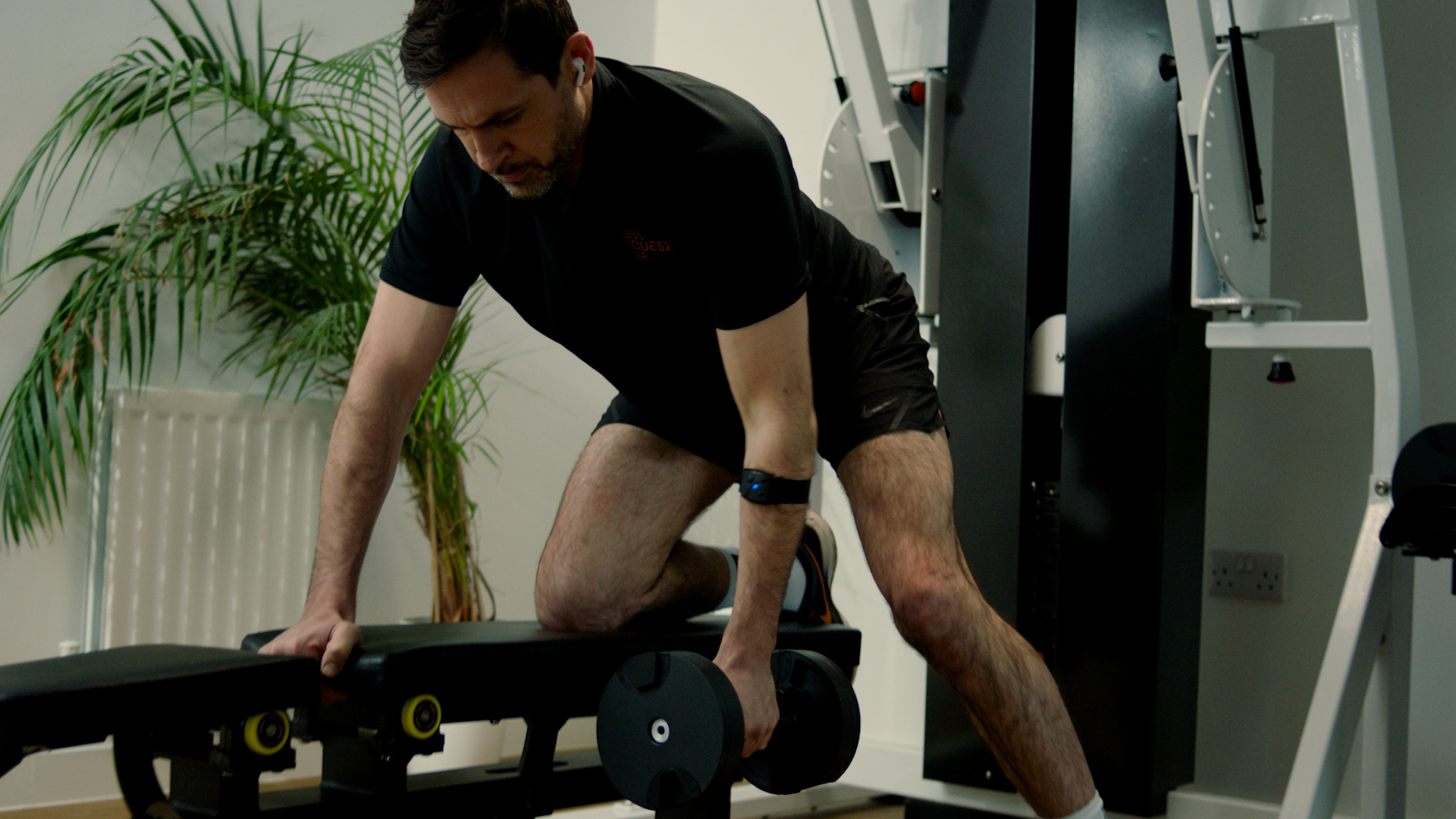
Biometrics and performance data track physiological response in real time through validated wearable technology:
- Resting heart rate and heart rate variability offer windows into nervous system regulation and autonomic balance, key indicators of recovery status.
- Recovery metrics assess readiness for training or high-demand work periods by analyzing sleep quality, strain accumulation, and physiological stress.
- Sleep architecture data identifies patterns affecting cognitive function, including time spent in deep sleep and REM cycles that drive physical and mental restoration.
Performance tracking monitors tangible outputs during training sessions:
- Strength levels and training volume confirm whether your programming stimulus is adequate, excessive, or needs recalibration.
- Body composition analysis reveals muscle mass changes and total and visceral fat loss, both tied to healthspan outcomes.
- Movement quality assessments identify mobility restrictions or asymmetries before they compromise performance or increase injury risk.
These aren't vanity metrics. They're health KPIs that inform decisions about training volume, recovery protocols, nutrition adjustments, and stress management. High performers track what matters because precision compounds over time. Our coaches interpret these metrics within the context of your schedule, goals, and current physiological state, not in isolation.
Data to Decision
Collecting information isn't the same as using it strategically. Many leaders accumulate data from wearable technology, lab panels, and fitness apps without understanding how to act on it. The value isn't in having more numbers, it's in knowing which metrics matter, what they're signaling about your current state, and how they interact with one another.
Data-driven health decisions require interpretation and context. A dip in recovery scores might prompt a reduction in training volume during a high-stress work period, but only if that dip coincides with elevated resting heart rate and reduced heart rate variability. Elevated fasting glucose trends might lead to adjustments in meal timing or macronutrient balance, but the intervention depends on whether the pattern stems from sleep disruption, chronic stress, or dietary factors. Declining strength metrics could indicate inadequate recovery, suboptimal programming, or hormonal shifts that warrant additional blood work and clinical consultation.
Travel schedules, board meetings, and major deals all create physiological stress that affects performance. Our coaches work with members to plan training intensity and recovery protocols around those demands rather than prescribing fixed programs that ignore real-world variables.
This is where personalized performance coaching separates itself from generic fitness programming. Expert interpretation from coaches with backgrounds in exercise physiology, sports science, and clinical practice converts raw metrics into actionable strategies that align with your schedule, goals, and current capacity. You don't need more data. You need someone who understands what it means in the context of your life and performance objectives, and when certain patterns warrant medical consultation.
Why Elite Coaching Uses Data Differently
Most fitness approaches treat data as an afterthought. Programs are built on general principles, and adjustments happen reactively, if at all. Elite performance coaching operates differently.
Generic fitness programming relies on:
- One-size-fits-all protocols based on population averages rather than individual biomarkers
- Reactive adjustments when something feels off or performance declines
- Limited personalization beyond exercise selection and basic progressions
Performance coaching for executives emphasizes:
- Data-informed decisions that align with your specific biomarkers, recovery capacity, and physiological state
- Personalized strategies that evolve based on continuous feedback from lab work, biometrics, and session performance
- Long-term optimization focused on healthspan and sustained performance rather than short-term aesthetic goals
Cuesz pairs clinical-grade diagnostics with continuous biometric monitoring and expert analysis from our team of coaches and clinicians. Each member receives 1:1 remote science-backed resistance training coaching sessions where strategies are built around their current physiology, travel schedule, work demands, and long-term objectives. Sessions adapt based on what the data reveals about your readiness and recovery, not what a templated program prescribes for week eight of a generic training block.
This approach treats healthspan optimization as an ongoing process, similar to how you manage a business or investment portfolio. The strategy evolves as you do. When biomarkers shift, protocols adjust. When life demands change, training adapts. The goal isn't adherence to a rigid plan, it's sustained performance over decades.